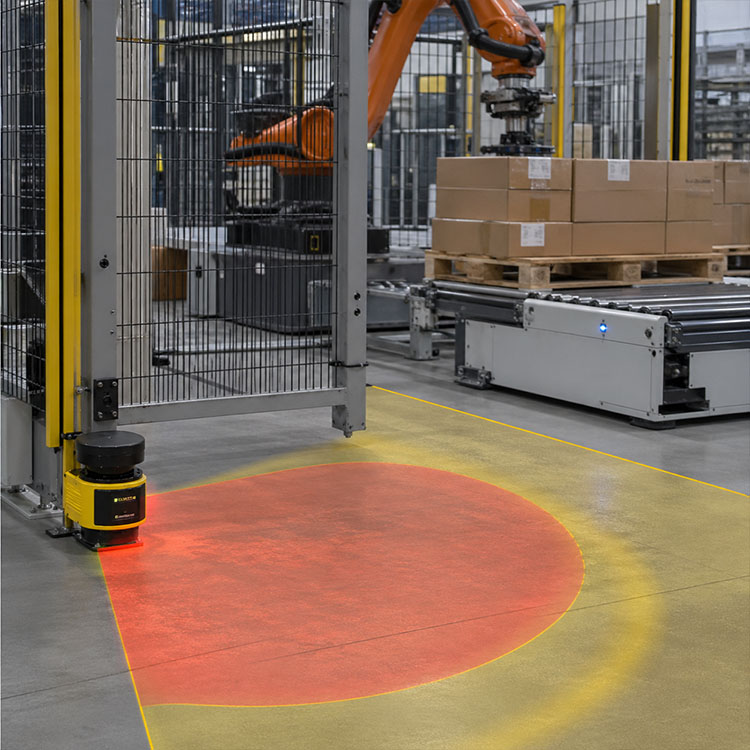
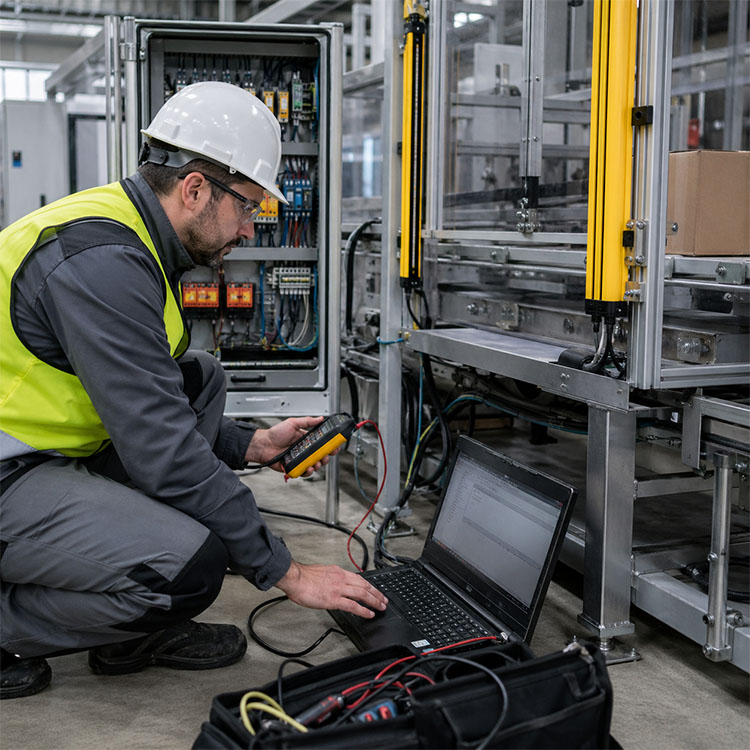
Vous avez besoin d'une barrière immatérielle de sécurité adaptée à votre machine ?
Indiquez-nous votre type de machine et vos exigences en matière de protection. Notre équipe d'ingénieurs vous aidera à sélectionner une barrière immatérielle de sécurité, un capteur ou un lidar de sécurité adapté à votre projet.
Obtenir de l'aide pour :
Projets de barrières immatérielles de sécurité standard et sur mesure
Besoins en matière d'OEM, d'intégration, de distribution et de mise à niveau de l'usine
Sélection des produits en fonction de la configuration de la machine, de la plage de détection, du rendement et de l'environnement
Cela peut sembler brutal, mais après avoir observé pendant des années des usines acheter des capteurs de sécurité comme elles achètent des presse-étoupes, j'ai perdu patience avec la version polie de cette conversation : si votre appel d'offres ne demande que le modèle, la gamme, le prix et le délai de livraison, vous n'achetez pas une fonction de sécurité ; vous achetez une boîte qui peut ou non survivre au premier examen sérieux d'un incident. Pourquoi prétendre le contraire ?
L'OSHA n'est pas vague en ce qui concerne les dispositifs de détection de présence. Son guide sur la protection des machines indique que les barrières immatérielles sont des mesures de protection courantes, mais prévient également que de nombreuses conditions doivent être remplies avant qu'elles puissent être utilisées comme protection au point de fonctionnement ; la même page indique que les dispositifs de détection de présence ne peuvent pas être utilisés sur les machines à embrayage à révolution complète et doivent être installés de manière à ce que la machine s'arrête avant qu'un travailleur n'atteigne la zone dangereuse.
Et les données relatives aux blessures ne cessent de le prouver. Le programme national de l'OSHA sur les amputations, mis à jour en 2025, indique que les employés sont souvent blessés lorsque les machines ne sont pas correctement protégées ou entretenues, ou lorsque l'énergie dangereuse n'est pas contrôlée ; le programme cible les lieux de travail industriels et manufacturiers dotés de machines susceptibles de provoquer des amputations.
Il s'agit donc bien de capteurs de sécurité. Mais il s'agit aussi de preuves, de responsabilité, de discipline en matière d'achat et de l'écart inconfortable entre “nous avons installé quelque chose” et “nous avons conçu une fonction de sécurité défendable”.”
Table des matières
L'appel d'offres est le point de départ de la plupart des projets de capteurs de sécurité.
J'ai vu des appels d'offres qui spécifiaient une barrière immatérielle de sécurité de 40 mm, une alimentation en courant continu de 24 V, une portée de 5 m et la mention “préférence CE”. Ce n'est pas une spécification. Il s'agit d'une note d'achat.
Le fournisseur peut établir un devis. Le responsable des achats peut le comparer. L'usine peut l'installer. Puis quelqu'un découvre que le temps d'arrêt de la machine est trop long, que le bouton de réinitialisation se trouve dans la zone dangereuse, que la logique d'inhibition n'a jamais été définie et que le câblage du connecteur M12 ne correspond pas au relais de sécurité. À qui appartient cette défaillance ?
Un appel d'offres sérieux pour barrières immatérielles de sécurité ou plus large capteurs de sécurité industrielle doit obliger le fournisseur à répondre aux questions importantes avant que l'argent ne change de mains. Cela inclut le type de machine, le point de danger, le PLr, le temps d'arrêt, la distance de sécurité, la méthode de montage, l'exposition environnementale, l'architecture de contrôle, les documents de validation, les pièces de rechange et ce qui se passe lorsque le capteur tombe en panne à 2h17 du matin lors d'une équipe de nuit.
Voici la dure vérité : les capteurs bon marché sont rarement la partie la moins chère d'un mauvais projet de sécurité.
Exigence 1 : Définir le danger avant de nommer le capteur
Ne commencez pas l'appel d'offres par “devis rideau de sécurité”.”
Commencez par le danger.
Une presse hydraulique, une formeuse de cartons, une cellule robotisée, un convoyeur de transfert, un palettiseur, une station de chargement à commande numérique, un parcours AGV et une machine d'emballage n'ont pas besoin du même capteur de sécurité simplement parce qu'ils impliquent tous des machines en mouvement. Une ouverture d'accès droite peut nécessiter une barrière immatérielle de sécurité de type 4. Une cellule robotisée incurvée peut nécessiter une surveillance de zone par scanner. Une zone de lavage peut nécessiter un boîtier étanche IP67. Un appareil compact peut avoir besoin d'un rideau lumineux de haute précision avec une résolution plus faible.
L'appel d'offres devrait exiger du fournisseur qu'il précise si le dispositif proposé est destiné à la surveillance des points d'opération, à la surveillance du périmètre, au contrôle d'accès, à la détection de présence, au retour d'information sur la position ou à la détection de processus. Il ne s'agit pas d'étiquettes cosmétiques. Elles modifient la réponse technique.
Exigence 2 : indiquer le niveau de performance requis, et pas seulement le type de produit
Demander le PLr.
Pas de “bonne qualité”. Pas “suffisamment sûr”. Pas “utilisé en Europe”.”
Votre appel d'offres doit préciser les performances de sécurité visées : ISO 13849-1 Catégorie 3 ou Catégorie 4, PL d ou PL e, SIL2 ou SIL3 le cas échéant, et l'architecture de sécurité attendue de la sortie du capteur via le relais de sécurité, l'automate de sécurité, les contacteurs, la boucle EDM et le circuit de redémarrage. L'architecture de sécurité normes de sécurité des machines sur votre site est exactement l'endroit où ce sujet doit être abordé, car les acheteurs ont besoin d'un chemin d'accès aux normes avant d'avoir besoin d'une liste de prix.
Mon avis est controversé : si le fournisseur ne peut pas parler de PLr, de couverture de diagnostic, d'exclusion de défauts et de comportement de validation sans recourir à un langage vague dans la brochure, je ne le laisserais pas établir un devis pour une machine à haut risque.
Exigence 3 : Demande de temps d'arrêt et de distance de sécurité
C'est là que le bât blesse.
Une barrière immatérielle de sécurité ne protège l'opérateur que si le mouvement dangereux s'arrête avant que l'opérateur ne puisse atteindre le point de danger, ce qui signifie que l'appel d'offres doit demander le temps d'arrêt de la machine, la direction d'approche, la hauteur de protection, la capacité de détection, la distance de montage, le temps de réponse et la méthode de calcul de la distance de sécurité dans un seul et même ensemble. Quelle est la valeur d'un capteur rapide sur une machine lente ?
Les directives de l'OSHA relatives à la détection de présence précisent que la distance de sécurité entre le champ de détection et le point de fonctionnement doit être supérieure à la valeur déterminée par la formule de distance de sécurité de la norme.
Il convient de l'indiquer dans l'appel d'offres :
Point de données de l'appel d'offres
Ce que l'acheteur doit fournir
Ce que le fournisseur doit confirmer
Type de machine
Presse, cellule robotisée, convoyeur, ligne d'emballage, parcours AGV
La réinitialisation ne peut pas créer un redémarrage dangereux
Exigence 4 : Spécifier séparément le type de capteur et la résolution de détection
Une barrière immatérielle de sécurité n'est pas un produit unique.
Un rideau de protection des doigts de 14 mm, un rideau de protection des mains de 30 mm, un protecteur de zone de 40 mm et un capteur d'accès périmétrique de 80 mm résolvent des problèmes différents. Placez-les dans le même appel d'offres et vous obtiendrez des devis qui semblent comparables mais qui ne le sont pas.
Votre appel d'offres doit porter sur la résolution, la hauteur de protection, la portée, l'espacement des faisceaux, le temps de réponse, la taille du boîtier, la méthode de synchronisation, les options de masquage et d'inhibition et les contraintes d'installation. Pour les grandes presses et les équipements lourds, adressez l'acheteur interne à barrières immatérielles pour machines lourdes au lieu de prétendre qu'un modèle compact est tout aussi crédible.
Petite erreur. Grande conséquence.
Exigence 5 : Exiger des logiques OSSD, EDM et de réinitialisation dans l'écriture
Je ne fais pas confiance aux appels d'offres qui indiquent “sortie PNP” et s'arrêtent là.
Pour les capteurs de sécurité, l'architecture de sortie est le contrat. L'appel d'offres doit définir les sorties OSSD doubles, l'alimentation 24 V CC, le courant de charge maximal, la protection contre les courts-circuits, la détection des défauts croisés, la compatibilité EDM, l'entrée de réinitialisation manuelle, le comportement de verrouillage du redémarrage et si le dispositif se connecte à un relais de sécurité ou à un automate de sécurité.
C'est ici que les fournisseurs les plus faibles s'exposent. Ils peuvent parler de la distance de détection toute la journée. Puis vous demandez comment le capteur se comporte après un défaut, comment la réinitialisation est surveillée, si les impulsions OSSD affectent la carte d'entrée de l'API et si l'EDM est pris en charge. Silence.
Ce silence est une donnée.
Exigence 6 : Séparer les capteurs de sécurité des capteurs non liés à la sécurité
Celle-ci met les gens mal à l'aise parce qu'elle traverse le théâtre d'acquisition.
Un capteur photoélectrique qui détecte une boîte n'est pas automatiquement un capteur de sécurité. Un capteur de proximité qui détecte un drapeau métallique n'est pas automatiquement sûr pour la protection humaine. Un LiDAR utilisé pour éviter les obstacles n'est pas automatiquement un scanner de sécurité.
Votre appel d'offres doit obliger les fournisseurs à indiquer si chaque dispositif proposé est homologué ou non, quelle norme s'applique, quel certificat ou rapport d'essai étaye cette affirmation et quelle fonction de sécurité il peut légalement prendre en charge. Relier les acheteurs en interne à sélection des dispositifs de sécurité lorsque vous l'expliquez, car la distinction entre “détecter quelque chose” et “protéger quelqu'un” est un point sur lequel de nombreuses équipes chargées des achats se montrent négligentes.
Exigence 7 : Signaler les atteintes à l'environnement avant que le fournisseur n'établisse un devis
Les usines ne sont pas des photos de catalogue.
Le brouillard de liquide de refroidissement, les projections de soudure, le film d'huile, la poussière poudreuse, les vibrations, les reflets, les jets d'eau, le lavage caustique, les chariots élévateurs, la traction des câbles, les chocs, les températures de 45°C dans les armoires et les routines de nettoyage en 12 heures sont autant d'éléments qui modifient le choix du capteur de sécurité. Un appel d'offres pour l'emballage alimentaire ou le traitement par voie humide doit comporter des questions directes sur les indices IP65, IP67, IP68, le matériel inoxydable, le matériau de la gaine du câble, la tolérance à la contamination de la fenêtre et les produits chimiques de nettoyage.
Si l'humidité ou le lavage font partie de l'environnement, l'acheteur doit être acheminé vers barrières immatérielles de sécurité étanches au lieu d'être noyés dans une navigation générique sur les produits.
Je le répète : un capteur qui passe avec succès l'examen théorique mais qui ne fonctionne pas dans le liquide de refroidissement n'est pas un problème de capteur. C'est un problème d'appel d'offres.
Exigence 8 : Exiger des dessins d'application, pas seulement des fiches techniques
Les fiches techniques sont utiles. Les dessins sont plus difficiles à falsifier.
Chaque appel d'offres pour des capteurs de sécurité de machine doit comporter des dessins dimensionnels, des dessins de montage, des schémas de câblage, la disposition des faisceaux, le brochage des connecteurs, des indications sur la distance minimale, des notes sur la zone aveugle et des commentaires sur l'installation en fonction de l'application. Si la machine a plus d'un côté d'accès, demandez un dessin montrant tous les chemins d'accès.
C'est là que protection de l'accès sur plusieurs côtés devient pertinent. Un côté peut avoir besoin d'une barrière immatérielle, un autre peut avoir besoin d'une protection fixe, et un troisième peut avoir besoin d'une porte ou d'un scanner verrouillé. La surconstruction est un gaspillage d'argent. La sous-construction crée des preuves.
Exigence 9 : Exiger des règles d'inhibition, de suppression et de contournement dès le départ
L'inhibition est l'endroit où les bons projets tournent mal.
Lorsque des boîtes, des palettes, des feuilles ou des supports de matériaux doivent traverser un champ protégé, les acheteurs demandent souvent une “fonction d'inhibition” comme s'il s'agissait d'une case à cocher. Ce n'est pas le cas. L'appel d'offres doit définir le type de capteur d'inhibition, la direction du matériau, la logique de synchronisation, la durée maximale d'inhibition, l'indication de la lampe, la méthode de neutralisation, la stratégie anti-défausse et la responsabilité de la validation.
Les directives de l'OSHA sur la détection de présence autorisent la mise en sourdine ou le contournement d'un DSP pendant la course ascendante d'un coulisseau de presse à des fins limitées telles que l'éjection de pièces, la vérification du circuit et l'alimentation, mais cela ne signifie pas qu'il faille “contourner chaque fois que la production est contrariée”
Voudriez-vous expliquer un vague paragraphe d'inhibition à un enquêteur après une amputation ?
Exigence 10 : demander une documentation, des certifications et une traçabilité réelles
Le papier est important.
L'appel d'offres doit demander une fiche technique, un manuel d'instructions, une déclaration de conformité le cas échéant, un rapport d'essai ou un certificat, un schéma de câblage, un tableau de codification des modèles, la traçabilité du numéro de série, une norme d'inspection de la production, un format de liste de colisage et une politique de contrôle des révisions. Pour les projets OEM, ajoutez les documents d'approbation des échantillons, la maquette de l'étiquette, la spécification du câble, la marque du connecteur et la révision du micrologiciel ou du matériel, le cas échéant.
C'est ici que votre Aperçu de l'approvisionnement des équipementiers La page s'intègre naturellement. Les acheteurs OEM n'ont pas seulement besoin de capteurs. Ils ont besoin d'une répétabilité sur 50 machines, puis 500 machines, puis d'un mal de tête sur le terrain trois ans plus tard lorsqu'une pièce de rechange ne correspond pas à l'échantillon approuvé.
Exigence 11 : Faire en sorte que le fournisseur s'approprie les questions de compatibilité
Un fournisseur ne doit pas se contenter de faire des offres. Il doit lancer un défi.
Votre appel d'offres doit exiger du fournisseur qu'il confirme la compatibilité avec les relais de sécurité, les automates de sécurité, les circuits d'arrêt d'urgence, les contacteurs, la surveillance des freins, les stations de réinitialisation, les protections existantes, les supports de montage, les longueurs de câble, les connecteurs M12 et les conditions de bruit électrique. Si le capteur est installé sur une presse plus ancienne, il convient de s'enquérir de la mesure du temps d'arrêt et de vérifier si le dispositif est adapté à ce type de machine.
Des cas concrets montrent pourquoi cela est important. En janvier 2024, le ministère américain du travail a signalé que Conn-Selmer devait payer $273 447 euros de pénalités proposées après qu'un travailleur eut subi une amputation du bout d'un doigt en installant une matrice de machine ; l'OSHA a cité des violations répétées et graves concernant le verrouillage/l'étiquetage, la formation et la protection des machines, et a déclaré que le taux d'accidents de l'usine était quatre fois supérieur à la moyenne de l'industrie.
Il ne s'agit pas d'une histoire de “spécification de capteur”. C'est une histoire de système.
Exigence 12 : Inscrire l'inspection, les pièces détachées et la réponse aux défaillances dans l'appel d'offres
Personne ne veut parler de maintenance lors de la passation des marchés.
Ils devraient le faire.
Un appel d'offres pour un capteur de sécurité doit demander des procédures de contrôle quotidien, des exigences en matière de tige de test, des instructions de nettoyage, une méthode d'alignement, une liste de codes de défaillance, la disponibilité d'émetteurs et de récepteurs de rechange, des options de remplacement de câble, la disponibilité des supports, le délai d'exécution typique, la gestion de la garantie et la réponse de l'assistance technique. Si une usine dispose de 18 lignes et d'un seul modèle de rideau de sécurité pour chacune d'entre elles, la stratégie en matière de pièces de rechange devient une question de temps de fonctionnement et une question de sécurité.
L'OSHA a publié des données sur les blessures et les maladies survenues en 2024, provenant de 370 000 rapports du formulaire 300A et de plus de 732 000 dossiers du formulaire 300/301, expliquant que l'accès public à ces données permet d'identifier les conditions dangereuses et les risques sur le lieu de travail.
Ma lecture ? Les données sont utiles après coup. De meilleurs appels d'offres sont utiles avant que le sang ne coule.
La liste de contrôle des appels d'offres en 12 points que vous pouvez vous approprier
Utilisez-le comme base de votre prochain appel d'offres pour des capteurs de sécurité pour machines, des barrières immatérielles de sécurité, des interrupteurs de verrouillage de sécurité, des LiDAR de sécurité et d'autres capteurs de sécurité industrielle.
#
Exigences non négociables de l'appel d'offres
Pourquoi c'est important
1
Type de machine et description des risques
Empêche la sélection de capteurs inadaptés
2
PLr, catégorie, SIL ou objectif standard requis
Forces sécurité - clarté des performances
3
Temps d'arrêt mesuré et base de la distance de sécurité
La preuve que la protection peut fonctionner physiquement
4
Résolution de détection et hauteur de protection
Sépare la protection des doigts, des mains, des bras et du corps
5
Architecture de sortie : double OSSD, EDM, réinitialisation
Définit le comportement réel de la fonction de sécurité
6
Statut des dispositifs homologués ou non homologués pour la sécurité
Empêche les capteurs ordinaires d'être utilisés à mauvais escient
Compatibilité avec les automates, les relais et les machines de sécurité
Évite les dispositifs “cités mais non utilisables”.
12
Processus d'inspection, de pièces détachées, de garantie et d'assistance
La sécurité est maintenue après la mise en service
Ce que je rejetterais immédiatement
Je rejetterais toute réponse à un appel d'offres indiquant que “notre capteur de sécurité est conforme aux normes internationales” sans préciser la norme, la portée du modèle, la base d'essai et la fonction de sécurité. Je rejetterais les déclarations vagues de type 4 sans documentation. Je rejetterais l'expression “compatible avec l'API” à moins que le fournisseur n'explique s'il s'agit d'une entrée API ordinaire ou d'une entrée API de sécurité. Je rejetterais tout devis qui traite l'inhibition comme une option occasionnelle.
Et je serais très sceptique à l'égard d'un fournisseur qui fait des devis rapides mais ne pose pas de questions.
En matière d'achats, la rapidité est une bonne chose. Mais dans le domaine de la sécurité des machines, un devis rapide peut signifier que le fournisseur n'a pas compris le danger, n'a pas examiné le problème du temps d'arrêt, ne s'est pas soucié de la logique de réinitialisation et n'a pas voulu ralentir la vente.
La place des barrières immatérielles de sécurité dans une stratégie d'appel d'offres plus intelligente
Les barrières immatérielles de sécurité sont souvent la bonne solution pour les points d'accès ouverts, les zones de chargement/déchargement, les applications de presse, les machines d'emballage et les cellules d'automatisation où la protection physique ralentirait la production ou serait contournée. Mais la famille de produits appropriée dépend de la machine.
Il ne s'agit pas d'imposer un dispositif. Il s'agit de faire en sorte que l'appel d'offres soit suffisamment honnête pour révéler le dispositif adéquat.
FAQ
Quelles sont les exigences de l'appel d'offres pour les capteurs de sécurité ?
Les exigences de l'appel d'offres pour les capteurs de sécurité sont les détails techniques, de conformité, environnementaux, de documentation et commerciaux qu'un acheteur doit fournir pour que les fournisseurs puissent proposer un dispositif adapté au danger réel de la machine, aux performances de sécurité requises, aux conditions d'installation, au système de contrôle et aux responsabilités en matière d'inspection. Un bon appel d'offres ne se limite pas au prix et à la livraison ; il définit la fonction de sécurité.
Inclure au minimum le type de machine, le point de danger, le PLr, le temps d'arrêt, la distance de sécurité, la résolution, la hauteur de protection, la plage de détection, les sorties OSSD, la logique de réinitialisation, les besoins d'inhibition, l'indice de protection IP, les dessins, les certificats, les manuels, le délai d'exécution, la garantie et l'assistance pour les pièces de rechange.
Comment rédiger un appel d'offres pour des barrières immatérielles de sécurité ?
Un appel d'offres pour des barrières immatérielles de sécurité est un document d'achat structuré qui définit le risque machine, l'ouverture de protection, la résolution de détection requise, les données de temps d'arrêt, la distance de sécurité, l'architecture de sortie, les contraintes de montage, l'exposition environnementale, les besoins en documentation et la responsabilité de validation du fournisseur avant de demander un prix. Ce document doit rendre impossible la dissimulation d'hypothèses peu sûres.
Ne vous contentez pas de demander un “rideau lumineux de 20 mm, d'une hauteur de 1 mètre”. Demandez si le capteur est de type 2 ou de type 4, s'il prend en charge les doubles sorties OSSD, quel est le temps de réponse, comment l'alignement est géré, si l'EDM est pris en charge et quel est le calcul de la distance de sécurité utilisé par le fournisseur.
Les capteurs de sécurité et les capteurs industriels ordinaires sont-ils identiques ?
Les capteurs de sécurité et les capteurs industriels ordinaires ne sont pas identiques, car les capteurs de sécurité sont conçus, testés et documentés pour prendre en charge les fonctions de réduction des risques pour la protection humaine, tandis que les capteurs ordinaires prennent généralement en charge la détection de processus, le comptage, le positionnement ou le retour d'information de l'automatisation, sans les mêmes exigences en matière de détection des défaillances et de performances de sécurité. Les confondre peut entraîner une grave responsabilité.
Un capteur photoélectrique sans sécurité peut parfaitement détecter une boîte et être néanmoins inacceptable pour protéger la main d'un travailleur à proximité d'une presse. L'appel d'offres doit obliger le fournisseur à déclarer le niveau de sécurité, les normes applicables, le comportement de sortie et la portée du certificat.
Quelles sont les spécifications des capteurs de sécurité les plus importantes pour la protection des machines ?
Les spécifications les plus importantes des capteurs de sécurité pour la sécurisation des machines sont le PLr requis, la catégorie de sécurité, la résolution de détection, le temps de réponse, la hauteur de protection, la portée de détection, le comportement de la sortie OSSD, la logique de réinitialisation, la classification environnementale, la compatibilité avec le temps d'arrêt et la distance d'installation documentée. Ces spécifications déterminent si le capteur peut réellement réduire les risques sur la machine.
Le prix n'a d'importance qu'une fois ces éléments définis. Avant cela, la comparaison des prix est surtout du théâtre, car deux devis avec une résolution, un temps de réponse, un niveau de sécurité et une portée de la documentation différents ne sont pas des offres équivalentes.
Quelles questions les acheteurs doivent-ils poser aux fournisseurs avant de choisir les meilleurs capteurs de sécurité pour l'automatisation industrielle ?
Avant de choisir des capteurs de sécurité pour l'automatisation industrielle, les acheteurs doivent demander aux fournisseurs de prouver l'adéquation de l'application, la portée de la cote de sécurité, la compatibilité avec les temps d'arrêt, la compatibilité avec le système de contrôle, l'adéquation avec l'environnement, la qualité de la documentation, la procédure d'inspection et l'assistance à long terme pour les pièces de rechange. Le meilleur capteur est celui qui correspond à la fonction de sécurité validée, et non celui dont la page de catalogue est la plus claire.
Demandez aux fournisseurs où l'appareil ne doit pas être utilisé. Les bons fournisseurs répondent directement à cette question. Les mauvais fournisseurs contournent la question.
Vos prochaines étapes
N'envoyez pas un autre appel d'offres vague.
Envoyez un appel d'offres au niveau de la machine comprenant une description des risques, des données sur le temps d'arrêt, les attentes en matière de distance de sécurité, le PLr, le type de capteur, la résolution, le câblage OSSD, la logique de réinitialisation, les règles d'inhibition, l'exposition à l'environnement, les exigences en matière de documentation et la prise en charge des pièces de rechange. Demandez ensuite au fournisseur de vérifier les spécifications avant d'établir un devis.